Market Trends Drive Battery Charger Development
By Paul Pickering, Mouser Electronics
The market for battery chargers is forecast to reach US$16 billion worldwide by 2020. This increasing demand is
being driven by several trends.
Portable and wearable electronics, smartphones, laptops, and tablets all require efficient chargers, in some cases
integrated into the device and operating via a USB cable. Numerous consumer and medical products, such as fitness bands, hearing aids, and
diagnostic monitoring patches, are now sold as wearable devices. The extremely limited battery space in these
products is driving the use of non-removable batteries, forcing changes in charging system designs or driving the
adoption of wireless charging.
The increasing popularity of electric
vehicles, with their large battery packs and high
voltages, has spurred massive investment in safe and efficient battery chargers.
The Internet of Things (IoT), with its emphasis
on massive data collection from distributed nodes, is driving advances in energy technology. In agriculture, for
example, the Smart Farm relies on numerous
nodes, spread across hundreds of acres, to collect data on weather, soil moisture levels, evaporation, and so
forth. These nodes are typically battery-powered and rely on energy-harvesting techniques such as solar power to supplement existing battery
capacity.
What batteries are powering these portable, wearable, and IoT devices, and how are they charged?
An Overview of Battery Chemistries
The best technique to charge a battery depends heavily on the specific chemical reaction, or battery chemistry,
that is used to convert electrical energy to chemical energy. Many materials can combine to form an
electrochemical battery cell; for example, a battery can be made out of a galvanized nail, a copper coin, and a
lemon. This is an extreme example, but each battery chemistry has its own set of characteristics such as voltage,
power density, useful life, and cost.
Many battery chemistries are non-rechargeable, as they involve irreversible reactions. Of the rechargeable
chemistries, only a few have found their way into widespread use. For example, the lead-acid battery has long been
the dominant battery in automobiles
because it is cheap, robust, easy to charge, and can deliver high current for cranking. On the other hand, it is
heavy and bulky, has a short cycle life of 500 charges, and is not suitable for fast charging.
Other battery chemistries such as Nickel Metal Hydride (NiMH), Nickel-Cadmium (NiCad), and Silver-Zinc (AgZn)
have advantages for specific applications, but Li-Ion has become the most popular chemistry for consumer devices
such as cellphones, laptops, and tablets, and is dominant in electric vehicle batteries. A Li-Ion battery is
lightweight, has no memory, and exhibits low self-discharge (around 1% per week). The nominal cell voltage is
3.6V, vs. 1.5Vfor NiMH and 2.0V for lead-acid, so fewer cells must be connected in series for high voltage applications such as electric vehicles, which require
over 400 volts. Li-Ion batteries have many desirable features, but they are much less tolerant than other
chemistries to over-charging, over-discharging, over-temperature, and excessive current. They have a strict set of
limits for safe operation; if these are exceeded, the consequences can include reduced battery life, reduced
capacity, or even cause spontaneous fires.
Key Battery Parameters
Several metrics are commonly used to assess the state of a battery and regulate its performance. Battery voltage,
temperature, etc., are well understood,but there are two additional specialized parameters:
State of Charge (SoC) measures the available energy in the battery, from 0% (empty) to 100% (fully charged). SoC
can be estimated from a measurement of the open circuit voltage (OCV). Alternatively, the remaining energy can be
calculated by measuring the current leaving or entering the cell, starting from a fully charged condition. This
technique is called Coulomb counting. Most battery chargers use a combination of the voltage and current methods.
State of Health (SoH) measures the condition of a battery or cell compared to its ideal condition. The SOH
typically begins at 100% when the battery is new, then declines over time as the battery ages.
As discussed above, Li-ion batteries require a more sophisticated charging strategy than the more tolerant
chemistries such as Lead-acid and NiMH.
Figure 1: The charging profile for Li-Ion batteries has several distinct
phases depending on
the initial state of charge of the battery (Source: "Charging Simplified for High Capacity Batteries," Bonnie
Baker, Microchip Technology)
Depending on the initial state of the battery, a Li-Ion battery charger must perform up to four charging
functions in the correct sequence to charge a Li-Ion battery efficiently and stay within the Li-Ion battery's safe
operating area (SOA). The basic procedure is to begin by charging the battery with a constant current (CC) and
switch to a constant voltage (CV) as the battery nears full charge; this is known as a CC/CV charging sequence.
If the battery is deeply discharged, it cannot accept full current immediately, so the CC sequence begins with a
small preconditioning charge (Pre-charge).As precondition current flows into the battery, its voltage will
increase until the CC threshold is reached and the full current is applied. CC charging continues until a preset
battery cell voltage is reached, which triggers the change to CV phase and the charge current decreases until the
battery reaches full charge. Following the end of the CV phase, the charger transitions to the End-Of-Charge or
termination phase and monitors the battery voltage until it drops to the point that further charging is needed.
With such a variety of battery chemistries, capacities, and applications, it's not surprising
that there is a wide range of battery chargers available. Many low-voltage devices such as smartphones, tablets,
building automation systems, and portable medical devices use single-cell Li-Ion and Li-Polymer batteries. Texas
Instruments' bq27320
Fuel Gauge is designed for such applications; it requires minimal configuration and system microcontroller
firmware development to help designers reduce time-to-market. Additionally, to help customers fine-tune battery
chemistry parameters, TI offers web-based tools such as GAUGEPARCAL, "a math calculation and simulation tool that helps
the battery designer to obtain matching parameters/coefficients for the specific battery profile." Texas
Instruments has many battery management
solutions to facilitate design.
Other battery chargers provide specialized feature sets optimized for particular applications. ON Semiconductor's HPM10 Power Management IC (PMIC), shown in Figure
2, is designed to manage the rechargeable batteries in hearing aids and implanted
hearing devices. In addition to generating the hearing aid supply voltage, the device can recharge several
chemistries including AgZn and Li−Ion. The HPM10 also detects the presence of other chemistries such as
zinc−air (Zn−Air) and NiMH.
Figure 2: Block diagram of the HPM PMIC for hearing aid battery charging and
management.
(Source: ON Semiconductor)
Application-specific features include a Charger Communication Interface (CCIF) to provide battery charging status
and failure information directly to the hearing aid microcontroller or DSP.
Design Tools & Evaluation Modules
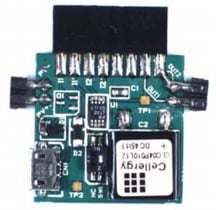 Figure 3: STMicroelectronics EFL700PMB EnFilm Power Management Board manages
the
charge and voltage regulation of the EFL700A39, Includes a super-capacitor to sustain high pulsed discharge
current, and more.
Figure 3: STMicroelectronics EFL700PMB EnFilm Power Management Board manages
the
charge and voltage regulation of the EFL700A39, Includes a super-capacitor to sustain high pulsed discharge
current, and more.Many manufacturers offer low-cost evaluation kits and online
design tools to help designers select the right product for the application and simplify the design task. Some
development boards are ready to use battery and management solutions, such as STMicroelectronics' EFL700PMB EnFilm Power Management
Board, which manages the charge and voltage regulation of the resident rechargeable, solid state, ultra-thin
film lithium battery (P/N EFL700A39.)
The EFL700PMB features a complete set of power management functions, intended to be directly connected to the
application for fast and easy evaluation, and includes a super-capacitor to sustain high pulsed discharge current.
The ready-to-deploy development board protects the battery against deep discharge and allows battery recharging by
external energy harvesting source or USB port and complies with several standards for drop-in implementation.
Emerging trends in battery charging technology
The Universal Serial Bus (USB) is the dominant
serial communications link in portable consumer devices. Most of these devices no longer have a dedicated battery
connector and recharge over the USB port instead. The charging capability varies with the version of USB being
used; the latest USB 3.1 can deliver up to 900mA with the standard connector and up to 3A with the new USB Type-C
connector, but both specifications are limited to 5V. The next generation of power delivery over USB is defined in
the USB Power Delivery Specification (USB PD),which allows bi-directional power transfer of up to 100W (5A and
20V).
Given the inevitability of wide-ranging USB adoption, many manufacturers are developing USB PD-compatible power
management devices; for example,Cypress Semiconductor's
CCG1incorporates
a complete USB Type-C and USB PD port control into a single device. Expect this to become the new standard model
for power delivery and charging in the next few years. The USB Type-C connector can be inserted without concern
for a polarity. TE Connectivity says it best in the datasheet for their splash-proof USB connectors (P/N
2295018-2), that "the USB Type-C connector features a reversible mating interface; the receptacle is designed to
accept a plug in any direction, enabling easy, reliable mating." Battery management will likely see USB charging
for a long time to come.
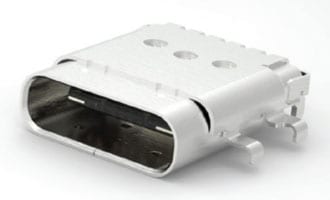 Figure 4: A USB Type-C connector. With a reversible mating interface, the
receptacle enables easy, reliable mating making USB as a charging choice even more likely going forward.
(Source:
TE Connectivity)
Figure 4: A USB Type-C connector. With a reversible mating interface, the
receptacle enables easy, reliable mating making USB as a charging choice even more likely going forward.
(Source:
TE Connectivity)Wireless charging has been available to
electric shavers and toothbrushes for years, but its spread into other markets has been slow. In particular, the
smartphone market has been bedeviled bytwo competing standards: Qi, from the
Wireless Power Consortium; and PMA, from the AirFuel Alliance. Both standards use inductive coupling, which
uses tightly coupled coils to transfer energy. It has high efficiency but is short-range and highly sensitive to
coil misalignment. An alternative technology is just being introduced; it uses resonant coupling, which operates
over longer distances, but is less efficient. Manufacturers are now designing wireless chargers to combine both
inductive standards, and look for this trend to continue. Semtech,
for example, has just introduced the TS8100,
a 10W wireless charging IC which supports both Qi and PMA standards.
Energy harvesting is another, less well-known
method of powering devices. With the limited battery capacities of portable and wearable devices, manufacturers
are looking to boost battery life by converting sources of stray energy into electrical energy. The technique uses
multiple techniques and energy sources and is collectively known as energy harvesting. Solar power is the most common approach
today; photovoltaic (PV) cells have appeared on multiple devices, from calculators to watches to the
data-collection nodes used in the Smart Farm.
Harvesting other sources of energy is the subject of much activity in the laboratory. Researchers have used
nanotechnology to harvest energy from a range of sources such as body motion, static electricity, string
vibration, and sound waves in air or water. So far there hasn't been much in the way of commercial products,
although both Texas Instruments and Maxim Integrated have
developed products that use harvested energy for charging. The MAX17710,
for example, is an integrated power-management IC for energy storage and load management, optimized for charging a
low-capacity cell from poorly regulated energy-harvesting devices with output levels from 1µW to 100mW.
Conclusion
In response to market demand for more efficient charging, manufacturers are developing new families of smart
chargers which replenish batteries quickly while still ensuring safety. To help in the adoption of these new
devices, they are also providing comprehensive evaluation boards and online design tools.
The push towards greener solutions, too, has spurred developments in energy harvesting techniques, which use
non-traditional energy sources to make the most of available battery capacity.
 As a freelance technical writer, Paul
Pickering has written on a wide range of topics including: semiconductor components & technology, passives,
packaging, power electronic systems, automotive electronics, IoT, embedded software, EMC, and alternative energy.
Paul has over 35 years of engineering and marketing experience in the electronics industry, including time spent
in automotive electronics, precision analog, power semiconductors, embedded systems, logic devices, flight
simulation and robotics. He has hands-on experience in both digital and analog circuit design, embedded software,
and Web technologies. Originally from the North-East of England, he has lived and worked in Europe, the US, and
Japan. He has a B.Sc. (Hons) in Physics & Electronics from Royal Holloway College, University of London, and has
done graduate work at Tulsa University.
As a freelance technical writer, Paul
Pickering has written on a wide range of topics including: semiconductor components & technology, passives,
packaging, power electronic systems, automotive electronics, IoT, embedded software, EMC, and alternative energy.
Paul has over 35 years of engineering and marketing experience in the electronics industry, including time spent
in automotive electronics, precision analog, power semiconductors, embedded systems, logic devices, flight
simulation and robotics. He has hands-on experience in both digital and analog circuit design, embedded software,
and Web technologies. Originally from the North-East of England, he has lived and worked in Europe, the US, and
Japan. He has a B.Sc. (Hons) in Physics & Electronics from Royal Holloway College, University of London, and has
done graduate work at Tulsa University.